
In Zambia, its estimated by World Health Organisation (WHO) that 150,000 people are living with blindness. It was found that 80% of these cases could have been prevented if adequate measures were in place.
This triggered CBM Ireland and local partners to collaborate with the Zambian Government to work towards the improvement of eye health services. These efforts built St. Francis Hospital in the district of Katete, allowing services to further into Zambia’s rural Eastern Province. St. Francis receives referrals from all district hospitals in the Eastern Province and is fully integrated into the Zambian health service. The hospital also runs coordinated clinics and surgical outreach programmes for patients who do not have the means to travel.
However, in spite of great efforts, the need for eye health services has risen over the years due to the growing demographic trends and aging of the population. St. Francis only has two general operating theatres which are used for all types of surgery meaning that emergency surgeries take precedence over elective surgeries and, consequently, eye surgeries are frequently rescheduled. This had a severe effect for eye patients and their families as patients cannot return for their surgery due to costs and logistics involved in making a second trip to the hospital.
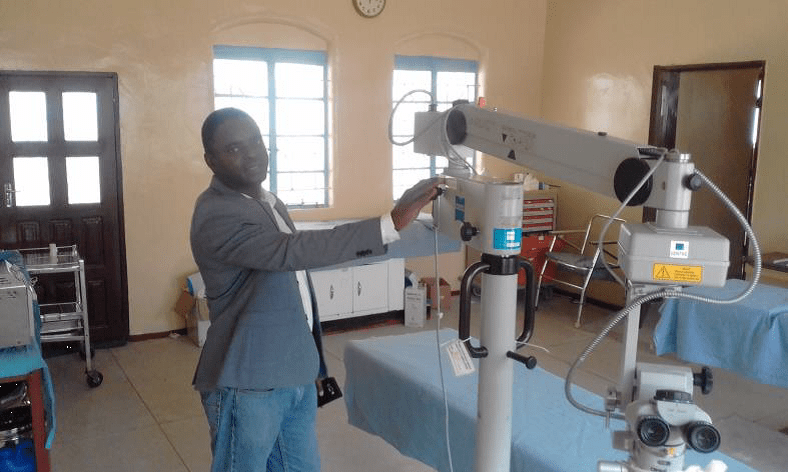
It was clear that there is a need for the establishment and construction of a dedicated ophthalmic operation theatre to avail St. Francis’ capacity in the area of eye health. To meet this need, CBM Ireland introduced the St. Francis Eye Care Theatre Project in which the building will be renovated and refurbished to house the eye theatre along with the instalments of high-tech surgical equipment such as A/B Scanners.
To support this project ElectricAid granted €10,000 to purchase one of the two A/B Scanners to enable ophthalmic specialists to scan the eyes and determine common sight disorders and to detect cataracts or corneal opacity.
Overall, this project helped the ophthalmic medical team to reduce waiting times and increase their capacity for annual eye surgeries from 293 in 2015 to a potential of 2,000. This allowed more people to regain their sight, allowing the children to go to school and for adults to earn a living and live independently. The patients were able to reach their full potential and break the cycle of poverty brought about by blindness or other sight-related illnesses. The impact of this project was truly transformative as it did not only reach the patients and their families but also the entire community. It directly addressed UN Sustainable Goals #3.


 electricaid.ie