
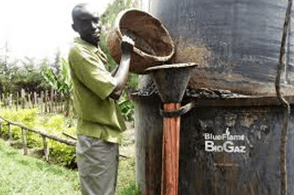
85-90% of the Ugandan population live in rural parts of the country. This segment of the population is totally dependent on the use of biomass to meet its energy demands for cooking and other domestic needs. It is estimated that the domestic biomass consumption for fuel is as high as 94% with very little use of modern energy such as electricity. The use of biomass as fuel has serious ill effects on the environment and population, with deforestation and soil infertility being some of the direct impacts.
Uganda Rural Community Support Foundation faced an increasing pressure to manage and utilize waste (whether of animal, human or municipal origin) in a sustainable way. A solution to the problem of organic waste in rural communities lies in their being able to convert it to biogas technology. This offers smallholders and farmers a long-term, cheap and sustainable energy source that is independent of the national electricity grid. However, although the technology involved in making biogas from waste has already been fully developed, there are obstacles impeding its adoption.


With the support of ElectricAid, these obstacles were tackled head on. This saw the construction of a biogas digester tank. This allows domestic waste to be used as a source of energy. The introduction of these tanks has large impacts. The use of biogas in place of woodfuel/firewood, charcoal and kerosene has led to improved health due to a reduction of respiratory and eye diseases which caused by the inhalation of smoke produced by woodfuel/firewood, charcoal and kerosene. The energy security is improved per household by 70%. These tanks also saw and increase in bioslurry produced. Bioslurry can be used to sustain round-the-year farming activities such as dairy, livestock rearing, horticulture, food and other cash crops through multiple and intensive cropping for over 3000 households. With the support of ElectricAid, quality of life in Uganda has improved for many rural farmers.
![E_SDG-goals_icons-individual-rgb-03[1]](https://i0.wp.com/electricaid.ie/wp-content/uploads/2019/07/e_sdg-goals_icons-individual-rgb-031.png?w=496&h=496&crop=1&ssl=1 "E_SDG-goals_icons-individual-rgb-03[1]")


The benefits of bioslurry and biogas directly contribute to the new UN Sustainable Development Goals of No Poverty (Goal 1), Zero Hunger (Goal 2), Good Health and Well-Being (Goal 3) and Affordable and Clean Energy (Goal 7).
 electricaid.ie