
The arid and semi-arid lands of Kenya makes up more than 80% of the country’s landmass and are home to approximately 36% of the country’s population. The ASALs have the lowest development indicators and the highest rate of poverty in Kenya. The Kenya Food Security Steering Group’s joint Long Rains Assessments Report of August 2016 estimated that a total of 1,254,600 people in 19 ASAL counties were acutely food insecure due to drought and other existing and emerging vulnerabilities.
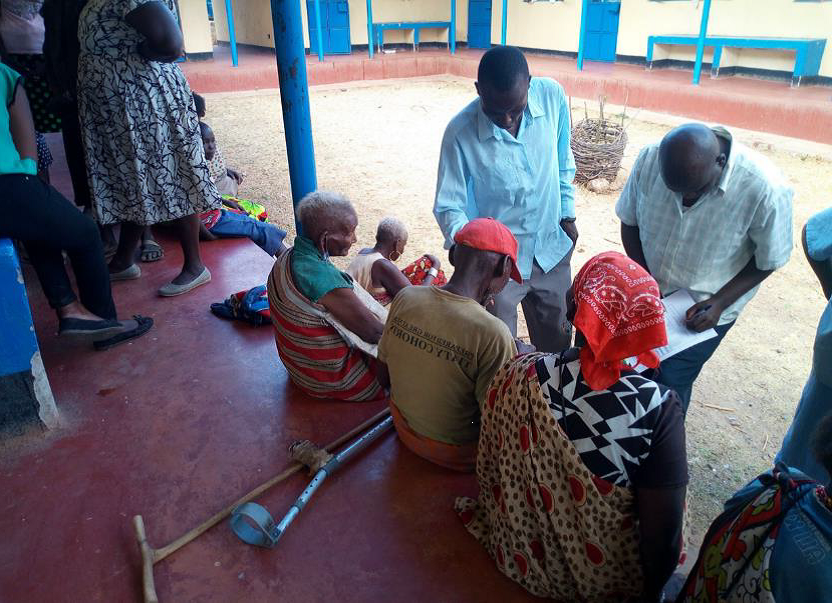
In partnership with CBM Ireland and the Kenyan Red Cross Society in 2017, ElectricAid donated €3,000 towards the Drought Response and Recovery Project that targeted four sub-counties of Turkana East, Baringo South, Baringo North and Baringo Tiati. To improve the quality of life of people with disabilities in these counties, they allocated the funds towards integrated medical outreach activities. This included medical services, such as, the immunisation of children under the age of 5, general outpatient services for minor ailments, ANC (absolute neutrophil count to assess defence against infection), deworming, and nutrition screening and supplementation. They also provided general integrated services by skilled healthcare personnel to community members with or without disabilities and assessed the community members to ascertain presence, nature and types of disabilities and the registration of members found to have disabilities with the National Council of People with Disabilities (NCPWD).


In total, 22 integrated medical outreaches have been conducted reaching 768 people with disabilities in areas of Tiaty Sub-County. These medical outreaches were conducted successfully in spite of the difficult conditions due to sudden heavy rainfall which often happens during drought season.
This project successfully improved access to health care and psycho-social support for the elderly and people with or without disabilities in the affected areas of Kenya. It provided them strength and health security to fight against the drought and other existing vulnerabilities. It also directly addressed the UN Sustainable Goals #3 Good Health and Well-Being and #10 Reduced Inequalities.


 electricaid.ie